Artificial intelligence is changing almost every industry, and the legal profession is no exception.
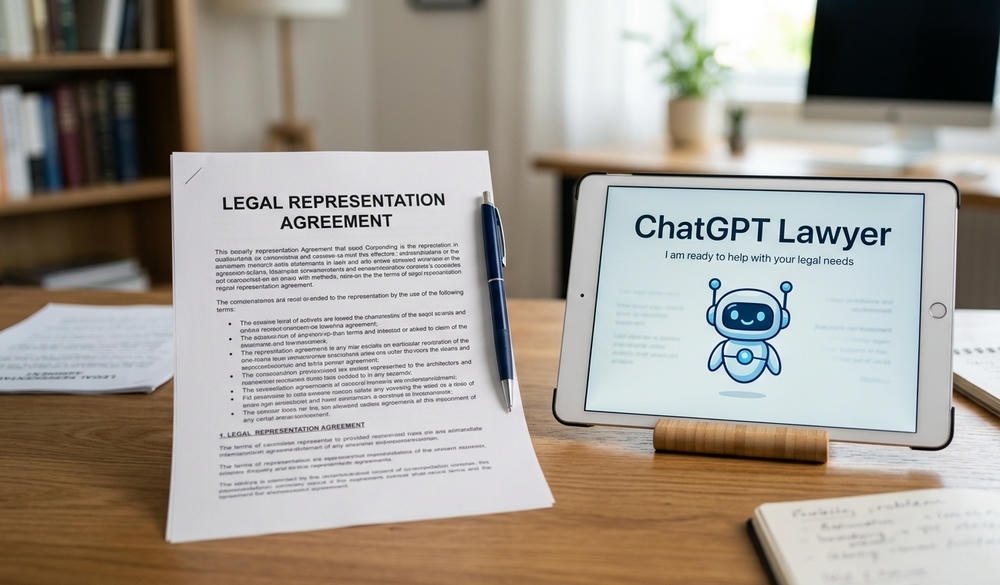
More people are now turning to platforms like ChatGPT to help them understand legal processes, draft documents, prepare submissions, or even work out how to run their own case in Court. In many ways, that is understandable. Legal issues can be stressful, expensive, and unfamiliar territory for most people, so naturally there is an appeal in having instant access to information.
And to be fair, AI can often provide surprisingly useful information.
But recently, I was involved in a Court matter that highlighted a very important distinction — the difference between information and actual legal representation.
The matter involved a self-represented party who had clearly relied heavily on AI to prepare their case. You could see it in the structure of the submissions, the language being used, and even the style of the cross-examination.
At first glance, some of it sounded polished. But as the hearing progressed, the issues quickly became apparent.
The arguments lacked context. Certain legal principles being relied upon didn’t properly apply to the facts of the case. The cross-examination often missed the important issues entirely. There was also a clear disconnect between what had been prepared beforehand and what was actually unfolding in the courtroom in real time.
Ultimately, the matter was struck out.
What stayed with me afterwards was that the person genuinely believed they had prepared properly. They had clearly spent hours researching, preparing material, and trying to understand the process. The problem wasn’t effort. The problem was the assumption that access to information is the same thing as having legal representation.
Courtrooms Are Not Static Environments
One of the biggest misconceptions people have about legal matters is that they are simply about knowing the law.
In reality, Court is rarely that straightforward.
Matters evolve constantly throughout the day. Witnesses answer questions differently than expected. Negotiations happen outside the courtroom. Evidence shifts. Magistrates and Judges approach issues differently. Sometimes a matter that looked strong on paper starts falling apart within minutes once the hearing begins.
A significant part of legal practice is being able to adapt to those changes in real time.
That is something experience teaches.
An experienced lawyer is constantly making strategic decisions during a matter, often without the client even realising it. Sometimes it is knowing which argument to pursue and which one to leave alone. Sometimes it is identifying when a witness is becoming unreliable. Sometimes it is recognising that the mood of the courtroom has shifted and adjusting the approach accordingly.
Those are not things that can simply be generated by software.
AI Can Provide Information — But Not Judgment
There is no doubt that AI will continue to become more sophisticated, and there is absolutely a place for it within the legal industry.
It can help people better understand legal terminology. It can assist with organisation and research. It can even help lawyers themselves with certain administrative tasks.
But legal matters are not purely intellectual exercises.
Good lawyers do far more than provide information. They provide judgment, strategy, advocacy, negotiation, and guidance. They understand the practical realities of litigation and the human side of legal disputes.
Most importantly, they stand beside clients during some of the most stressful moments of their lives.
That human element matters far more than people often realise.
The Risks of Relying Solely on AI
One of the concerns emerging with AI-generated legal assistance is that people can sometimes develop a false sense of confidence.
A submission may look polished. A legal argument may sound persuasive. But if the information is incomplete, taken out of context, procedurally incorrect, or strategically flawed, the consequences can be significant.
By the time those issues become obvious in Court, the damage may already be done.
This is particularly important in matters involving:
In those situations, proper legal advice is not simply about having documents drafted correctly. It is about understanding the broader strategy and protecting a client’s position from beginning to end.
How EAS Legal Can Assist
At EAS Legal, our team regularly appears in contested matters across criminal law, family law, intervention order proceedings, and commercial disputes throughout Victoria and Australia.
We understand that legal matters are rarely just about technical legal principles. They are about strategy, preparation, advocacy, and guiding clients through difficult situations with practical and experienced advice.
If you require legal advice or representation, contact EAS Legal to speak confidentially with one of our experienced lawyers.
Need to speak with a lawyer?
Our experienced lawyers are here to help you understand your legal rights and options. Contact us for a confidential discussion about your situation.