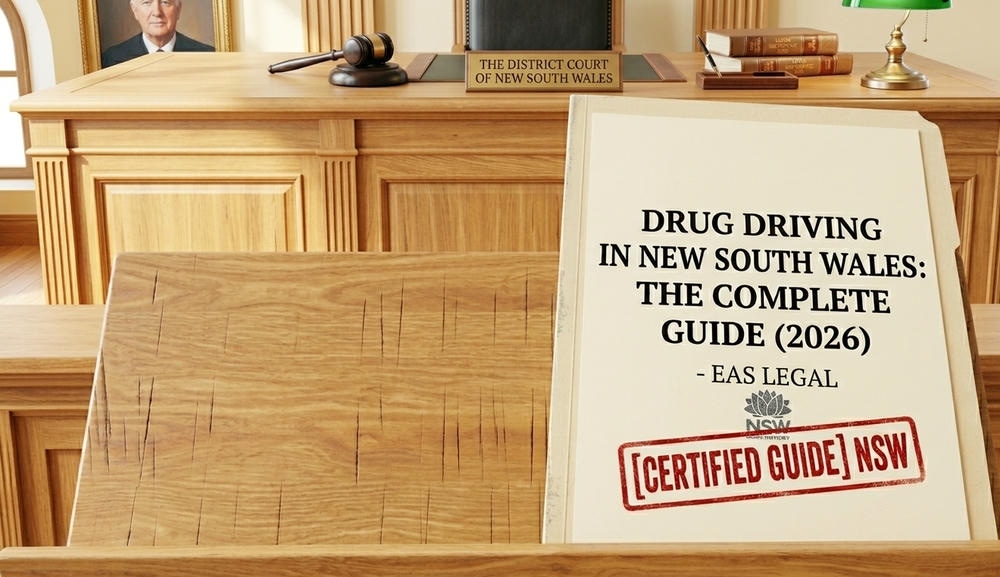
Drug driving offences are increasingly common throughout New South Wales, with NSW Police conducting extensive roadside drug testing operations across metropolitan and regional areas. Each year, thousands of drivers are subjected to roadside saliva testing and many are surprised to discover that they can be charged despite feeling completely unaffected by drugs at the time.
One of the most misunderstood aspects of NSW drug driving law is that a person does not necessarily need to be impaired to commit an offence. Depending on the charge, the prosecution may only need to prove that a prohibited drug was present in the person’s oral fluid while driving.
This distinction catches many motorists by surprise. People often assume that if they are not affected by drugs and can drive safely, they cannot be prosecuted. Unfortunately, that assumption is incorrect.
New South Wales has adopted a strong enforcement approach to drug driving. Police regularly conduct Mobile Drug Testing operations throughout the State and have broad powers to require drivers to provide oral fluid samples. These testing operations are often conducted alongside random breath testing and form a significant part of NSW’s road safety strategy.
The substances most commonly tested for include cannabis (THC), methamphetamine and MDMA. If a prohibited drug is detected, a driver may face criminal charges regardless of whether there is evidence of poor driving or impairment.
Drug driving offences in NSW can broadly be divided into two categories. The first involves offences relating to the presence of a prohibited drug. The second involves more serious allegations that a person was driving under the influence of a drug.
The distinction is important because the penalties, evidentiary requirements and available defences can differ significantly.
Where allegations involve driving under the influence, the prosecution generally seeks to establish that the driver’s ability to properly control the vehicle was affected by drugs. This may involve evidence relating to driving behaviour, police observations, admissions, medical evidence and expert opinion.
Drug testing procedures play a central role in many prosecutions. Following an initial roadside indication, confirmatory testing procedures are generally undertaken. Questions occasionally arise regarding testing protocols, the handling of samples and the admissibility of evidence.
Medicinal cannabis remains one of the most rapidly developing areas of drug driving law in New South Wales. While medicinal cannabis may be lawfully prescribed, this does not necessarily provide immunity from prosecution. Drivers frequently misunderstand the interaction between medicinal cannabis prescriptions and existing road transport laws.
As medicinal cannabis use continues to increase throughout Australia, pressure has mounted for reform of existing drug driving laws. However, at present, motorists should exercise caution and obtain legal advice regarding their specific circumstances.
The consequences of a drug driving conviction can be significant. Depending on the nature of the offence, penalties may include fines, criminal convictions, licence disqualification, community-based orders and, in serious matters, imprisonment.
For many people, the impact of losing their driver’s licence extends far beyond the immediate penalty. Employment, family responsibilities, business commitments and day-to-day activities often depend heavily upon the ability to drive.
Courts will typically consider a range of factors when determining penalty, including prior traffic history, criminal history, the circumstances of the offence, evidence of rehabilitation and the personal circumstances of the offender.
Not every drug driving matter is straightforward. Some cases involve legal issues relating to testing procedures, police powers, admissions, prescription medications or evidentiary concerns. In other matters, the primary focus may be on presenting compelling mitigation to minimise the consequences.
Many first-time offenders are surprised by the seriousness with which Courts approach drug driving offences. While prior good character, employment, rehabilitation and insight can all be relevant, the Court’s primary concern remains road safety.
One of the biggest mistakes motorists make is assuming that because they tested positive, there is no point obtaining legal advice. While some matters are appropriately resolved by way of a plea of guilty, others contain legal and evidentiary issues that require careful examination.
The Court process can be daunting, particularly for individuals who have never previously appeared before a Court. Understanding the charges, available options and likely outcomes can significantly reduce stress and assist in achieving the best possible result.
How EAS Legal Can Help
EAS Legal regularly represents clients charged with drug driving offences throughout New South Wales. Our team understands the significant consequences that can flow from a drug driving allegation and works closely with clients to achieve the best possible outcome.
Whether you are facing a first offence, allegations of impairment or a more serious traffic matter, our lawyers can provide practical advice and strong representation throughout the Court process.
Need to speak with a lawyer?
Our experienced lawyers are here to help you understand your legal rights and options. Contact us for a confidential discussion about your situation.