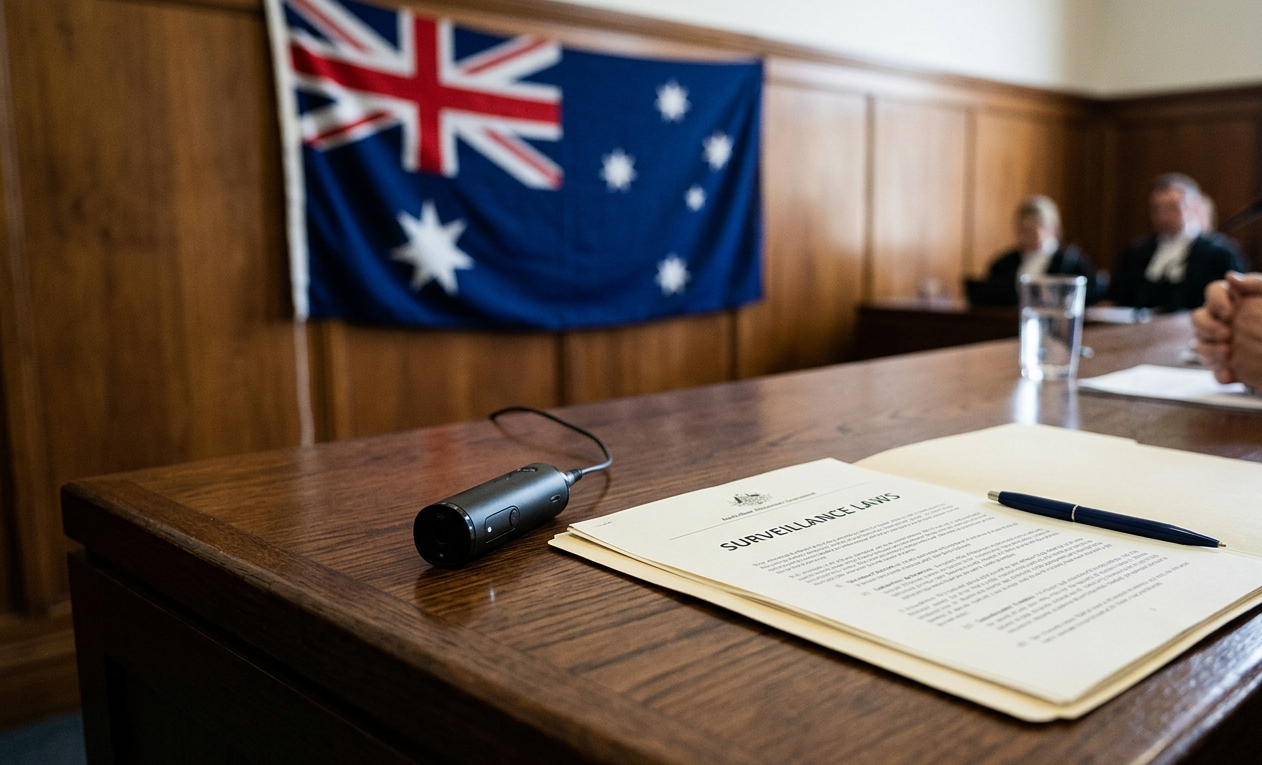
With smartphones, smartwatches, hidden cameras, and recording apps now easily accessible, more Australians than ever are secretly recording conversations.
We regularly see covert recordings arise in:
However, many people are surprised to learn that recording a conversation without consent can potentially amount to a criminal offence.
At EAS Legal, we regularly advise clients regarding surveillance device laws, privacy issues, and the use of covert recordings in Court proceedings across Victoria and Australia.
This article explains when it is legal to record conversations in Australia, how privacy laws operate, and the risks associated with secretly recording others.

Is It Legal to Record a Conversation in Australia?
The short answer is: it depends.
Australia does not have one single national law dealing with private recordings. Instead, each State and Territory has its own legislation regulating:
This means the legality of recording a conversation can vary depending on:
What Is a “Private Conversation”?
Most laws relating to covert recordings focus on “private conversations”.
Generally speaking, a private conversation is one where the parties reasonably expect that the conversation will not be overheard or recorded.
Examples may include:
Conversations held openly in public settings may not always attract the same privacy protections.
Can You Record a Conversation You Are Part Of?
This is where confusion often arises.
In Victoria, a person who is a party to a conversation may sometimes lawfully record that conversation without informing the other person.
However, legal issues often arise regarding:
For example, distributing or publishing covert recordings can potentially create separate legal issues, even where the original recording itself was lawful.
Is It Illegal to Secretly Record Other People’s Conversations?
Generally, yes.
If you are not a party to the conversation and use a listening device to secretly record others, this may amount to a criminal offence.
This issue commonly arises in:
Many people mistakenly assume that acting with “good intentions” automatically makes the conduct lawful. That is not necessarily correct.
Covert Recordings in Family Law Matters
One of the most common areas where covert recordings arise is family law.
Parents sometimes record:
In some cases, parents place recording devices on children in an attempt to gather evidence.
These situations can become legally complex very quickly.
Even where recordings are made out of concern for safety or wellbeing, there may still be:
Are Covert Recordings Admissible in Court?
Not always.
Even if a recording exists, that does not automatically mean it can be used as evidence.
Courts may consider factors such as:
In some circumstances, unlawfully obtained recordings may still be admitted into evidence. In other situations, they may be excluded entirely.
Workplace Recordings and Employment Issues
We are increasingly seeing covert recordings arise in workplaces.
Examples include:
These recordings can create significant legal and employment issues, including:
Criminal Penalties for Illegal Recordings
Depending on the circumstances and the relevant State legislation, unlawful recordings can potentially result in:
The risks become even greater where recordings are:
Common Myths About Recording Conversations
Before recording conversations or using surveillance devices, it is important to obtain legal advice.
What may initially seem like practical or protective conduct can potentially expose someone to:
These matters are highly fact-specific and require careful assessment.
At EAS Legal, we regularly advise clients regarding:
If you are unsure about the legality of a recording, or if recordings have become an issue in your matter, our team can provide strategic and practical advice tailored to your circumstances.
Contact EAS Legal to discuss your situation confidentially with one of our experienced lawyers.
Need to speak with a lawyer?
Our experienced lawyers are here to help you understand your legal rights and options. Contact us for a confidential discussion about your situation.